
Couples Therapy & Counseling in Raleigh, Durham, Chapel Hill & Surrounding Areas

Couples Therapy
Strengthen your connection with evidence-based couples therapy designed to help you communicate, heal, and grow together

Couples therapy (or 'couples counseling') is professional support where partners work with a trained therapist to improve communication, resolve conflict, and strengthen their relationship.
Every couple is different, and so are the goals of couples counseling. Often, couples seek counseling to:
-
Couples therapy strengthens relationships by creating a judgment-free space where both partners can communicate authentically, understand each other's needs, and work on unhelpful patterns.
With a trained therapist's guidance, couples rebuild trust, deepen emotional connection, and develop skills that help them navigate challenges together for years to come.
-
A therapist can help you identify unhelpful communication patterns and teaches evidence-based techniques for expressing needs and listening with empathy. These skills can transform how partners connect, even during disagreements.
-
Therapy reveals the cycles you're caught in and why they keep repeating. With awareness and new tools, couples can change these patterns and respond to each other differently.
-
Hurt in a relationship can come from betrayal, neglect, or conflict that keeps repeating. When both partners are willing to do the work, therapy offers a steady, supportive space to understand what happened, talk about it honestly, and begin rebuilding trust at a pace that feels right for you.
-
Major life transitions, career changes, parenting disagreements, health issues, all can strain relationships. Therapy helps you navigate these challenges as a team rather than working against each other.
-
Whether you're working through uncertainty about the relationship or simply want to strengthen your vision as a couple, therapy provides a safe space to explore your individual and shared goals.
A therapist helps facilitate these important conversations, ensuring you're truly heard and understood, so you can move forward together with clarity and confidence.
-
Therapy addresses the emotional and sometimes physical distance that has worked it’s way into a relationship. By rebuilding connection and understanding, couples can rediscover the closeness and vulnerability that creates real intimacy.
-
Couples therapy isn't only for relationships in crisis. Many partners come in during good times to build a strong foundation for the future.
Premarital counseling helps couples prepare for marriage or a long-term commitment by talking through important topics before they become sources of conflict. Together with a therapist, you can explore communication styles, expectations, finances, family relationships, intimacy, and your hopes for the future. It's a chance to strengthen your connection and build skills you'll use for years to come.
In all cases, the therapist provides professional, non-judgmental, and confidential support as partners work toward their relationship goals. Each session provides a safe and healing space for partners to be ‘really real’ with one another, in ways that are difficult during the hectic pace of daily life.
Every therapy plan is unique. In many cases, therapy begins with joint assessment and then there may be separate, individual meetings with your therapist. After learning about your relationship dynamics and goals, your therapist will propose a custom treatment plan specifically for you. Most sessions are joint meetings in which partners participate equally.
The number and frequency of sessions depend on a couple’s goals, progress, availability, and budget. Short-term counseling may be ideal for couples with specific or limited concerns, while longer-term counseling can provide deeper support. Your therapist can help you set an intended timeline, and you can revise it at any time.
What Does Couples Therapy Look Like?
Every one of our couples therapists has specialized training and experience helping partners work through challenges together. Some are Licensed Marriage and Family Therapists (LMFTs), whose graduate education centered specifically on relationships and family systems. Others come from a range of clinical backgrounds and have built their expertise through focused training and years of practice. Both paths lead to skilled couples therapists, so there's no need to limit your search to one credential.
Our therapists are LGBTQ+ affirming and experienced in supporting relationships of all kinds, including polyamorous and other non-monogamous relationships.
Most of all, look for someone you feel comfortable with. Read through our therapists' bios and notice who resonates, since a strong connection with your therapist matters more than any single credential.
Not sure where to start? Reach out and we'll help you find a good fit.
How do we choose a couples therapist?
-
Couples therapy is an investment in your relationship. Our couples therapists typically charge $190 for the initial intake session and $160 for each session after that. Some therapists offer sliding scale fees for clients who meet financial criteria.
-
We don't bill insurance for couples therapy, so sessions are paid out of pocket at the time of service. Insurance generally requires a mental health diagnosis and proof of "medical necessity," which rarely fits couples work. It would also mean sharing details about your relationship with your insurer and giving them a say in your treatment. Paying directly protects your privacy and keeps you in control of your care.
-
Yes. Short-term therapy can be a good fit for couples who want a more focused, limited commitment, and some of our therapists offer a limited number of sliding scale sessions. Talk with your therapist about what might work for you.
Billing and Insurance
Meet Our Couples Therapists
-
![]()
Melissa Graf, MSW, LCSW (she/her)
Founding Partner, Outpatient Psychotherapist
Location: Pittsboro
-
![]()
Kimber Vaughan MS, M.Ed, LMFTA (she/her)
Outpatient Psychotherapist
Location: Chapel Hill
-
![]()
Mackenzie Van Remortel MA, LMFT (she/her)
Outpatient Psychotherapist
Location: Chapel Hill
-
![]()
Micki McCarthy MSW, LCSWA (she/her)
Outpatient Psychotherapist
Location: Chapel Hill
-
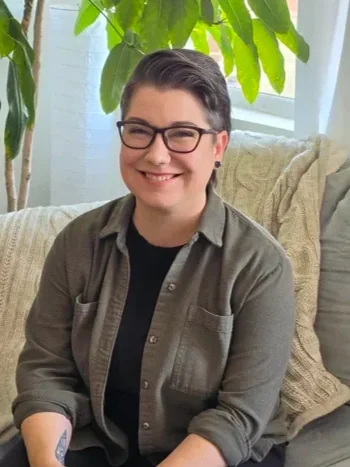
![Jayden in the office]()
Jayden Falldorf MSW, LCSWA (he/him)
Outpatient Psychotherapist
Location: Durham



Related Concerns
Relationship difficulties often connect to other areas we treat. You may also want to read about:
Life Transitions
Grief & Loss