
Greenwood Journal
Learn more about mental health from our clinicians & guests

How Therapy Can Help With Grief and Loss
Grief can follow many kinds of loss, and there’s no right way or timeline to move through it. This post explains how therapy can help, when extra support may be worth considering, and what to expect when you reach out.

A Guide to the Therapy Approaches Our Clinicians Use
CBT, EMDR, IFS, and other therapy approaches can be confusing to sort through. This guide explains each one in plain language, and why you don’t need to choose an approach before reaching out. Your clinician will help with that.

What “Evidence-Based” Means in Our Therapy Rooms
“Evidence-based” gets used a lot in mental health care, and it can sound like jargon. This post offers a clinician’s perspective on what the term means in our therapy rooms, and how research and your own goals work together in your care.
What Is CBT, Really?
Cognitive Behavioral Therapy (CBT) looks at how thoughts, feelings, and actions shape one another. Learn how CBT works, what sessions can look like, and why it’s one of the most widely researched approaches for anxiety, depression, and more.

What Is Emotion-Focused Therapy?
What if your feelings weren't something to manage, but something to understand? Here's how Emotion-Focused Therapy works, and why it might be the approach you've been looking for.
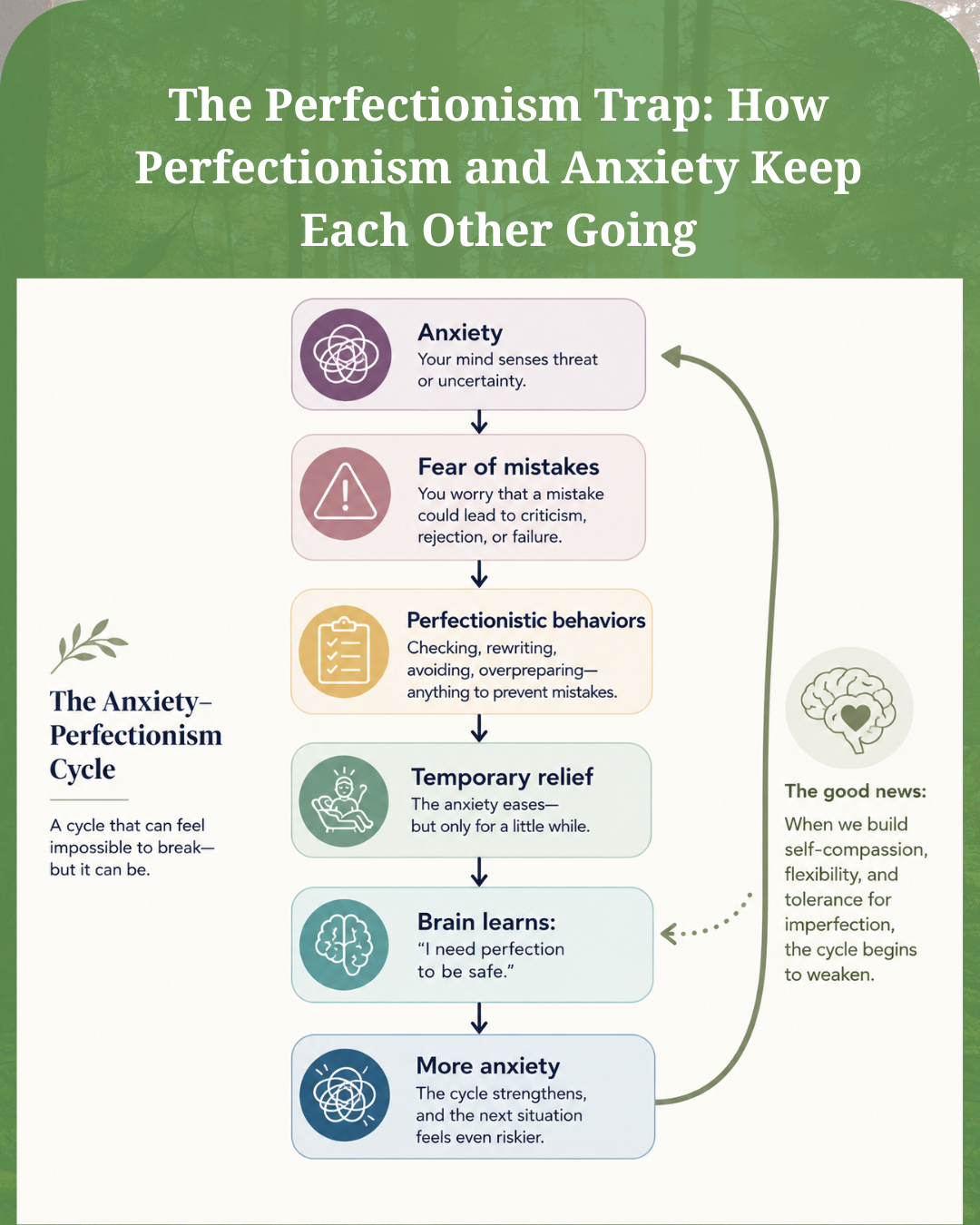
The Perfectionism Trap: How Perfectionism and Anxiety Keep Each Other Going
Perfectionism and anxiety often reinforce each other in a cycle of fear, overthinking, and self-criticism. Learn why it happens and how therapy can help.


College Transitions
Therapy can play a powerful role in helping students navigate the challenges of starting college. From managing academic stress and anxiety to building coping skills, confidence, and healthy relationships, therapy offers support during one of life’s biggest transitions. Research from the American College Health Association and the American Psychological Association shows that counseling can improve emotional resilience, adjustment, and overall well-being. For students facing homesickness, pressure, or identity changes, therapy provides a safe space to grow and thrive during the college years.
What Trauma-Informed Care Means
Trauma-informed care is an approach that recognizes how trauma affects a person’s emotions, behaviors, and sense of safety. Instead of focusing solely on symptoms, this model prioritizes creating an environment of trust, choice, and collaboration. Trauma-informed therapy helps clients feel safe, understood, and empowered as they navigate the healing process.

How Therapy Helps with Depression
Discover how evidence-based psychotherapy helps reduce depression and anxiety by reshaping thoughts, building resilience, and supporting long-term healing.
Finding Focus: How Therapy Supports ADHD
Living with ADHD can feel overwhelming and exhausting. Therapy offers practical strategies, support, and insight to help you manage focus, organization, and emotions. At Greenwood Psychotherapy, we help you build tools that fit your life, reduce stress, and boost confidence in your abilities.

Rebuilding Self-Worth
Struggling with self-esteem or self-worth can make everyday life feel heavy and discouraging. Therapy provides a safe space to explore these feelings, challenge negative beliefs, and build a stronger, more compassionate relationship with yourself. At Greenwood Psychotherapy, we help you cultivate confidence, resilience, and a sense of inner value.
Let’s work together